Pegasus Design System: Scaling Design & Leadership at McAfee
When I embarked on the journey of creating Pegasus, McAfee's design system, I was a Senior Product Designer with a vision to unify and streamline the design process across multiple legacy platforms. The initiative evolved into a full-time leadership role, culminating in my transition to Product Design Manager, where I led a dedicated team in scaling Pegasus into a robust and widely adopted system.
Problem
McAfee's product ecosystem was fragmented, with inconsistent UI components, redundant design efforts, and platform inefficiencies, leading to higher costs and limited scalability.
Solution
Developed Pegasus, a scalable design system that unified UI components, improved workflow efficiency, and introduced governance to streamline cross-platform consistency.
Impact
✓ 40% reduction in redundant design work
✓ 50% faster UI development cycles
✓ Organization-wide adoption and improved design-development collaboration
My Role
Led the strategy, team building, execution, and advocacy for Pegasus, managing stakeholder alignment, design system governance, and engineering collaboration to drive adoption.
The Challenge: Unifying McAfee's Product Ecosystem for Efficiency
McAfee's product ecosystem was deeply fragmented — each platform had its own UI inconsistencies, redundant design efforts, and a lack of scalability. The absence of a unified design system created inefficiencies, increased development costs, and impacted the user experience.
Design systems were also emerging as a discipline, requiring us to define best practices while managing cultural change. To make Pegasus successful, I had to treat it like a product, complete with stakeholder alignment, team assembly, and agile development.
Building the Team & Defining the Vision
How It Started
Pegasus began as a side project while I was a Lead Designer. Our VP of Design saw its potential and suggested that I transition into a managerial role to build and scale the initiative. I had to hire the right talent and establish the foundation for a scalable system.
The Team
Inherited one developer.
Hired a Lead Developer to build the system architecture.
Hired a Product Designer to ensure visual and interaction consistency.
Hired an intern to support research and documentation.
With the right mix of skills, we moved from an ad-hoc approach to a structured, product-driven methodology.
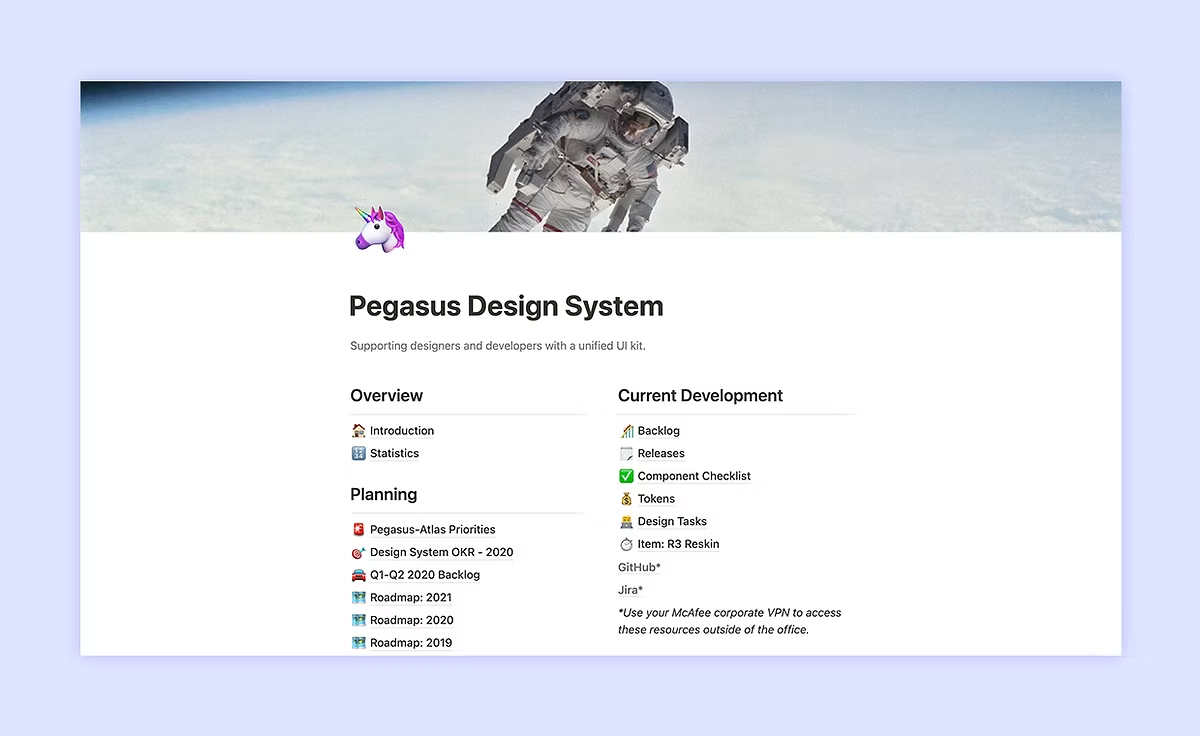
An early Pegasus hub organizing plans, development, and team resources
The Approach: Treating Pegasus Like a Product
Pegasus needed more than a library of components — it needed governance, scalability, and integration across McAfee's ecosystem. I structured the project into three phases.
1. Foundation
Decoupled assets, typography, and components from existing apps.
Built a Figma library for designers and a React component library for engineers.
Created ZeroHeight documentation for easier onboarding.
Transitioned design tools from Sketch and InVision to Figma, significantly reducing costs.
2. Implementation & Adoption
Rolled out Pegasus Base for desktop and web.
Launched Pegasus Lite for flexibility across legacy systems.
Partnered with engineering teams to integrate Pegasus into core products.
Developed an agile contribution model for scalability and shared ownership.
3. Scaling & Maturity
Introduced dark mode, motion guidelines, and accessibility standards.
Expanded support for mobile platforms.
Integrated automated QA testing for engineering readiness.
Built governance models to scale beyond our immediate team.
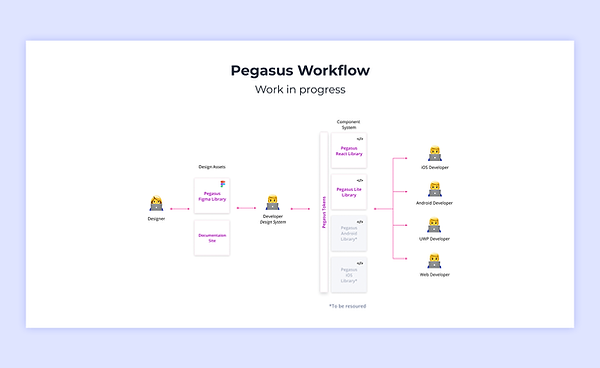
How Pegasus assets and components flow from designers to developers
Key Achievements & Impact
Quantifiable Success
407+ components adopted across multiple products.
3,900+ elements styled with Pegasus Lite.
Reduced redundant design work by 40%.
Decreased UI development time by 50%.
Cultural & Organizational Impact
Established cross-functional collaboration between design and engineering.
Shifted McAfee from isolated efforts to a systematic and scalable design practice.
Inspired company-wide adoption, positioning Pegasus as a foundational product-development tool.
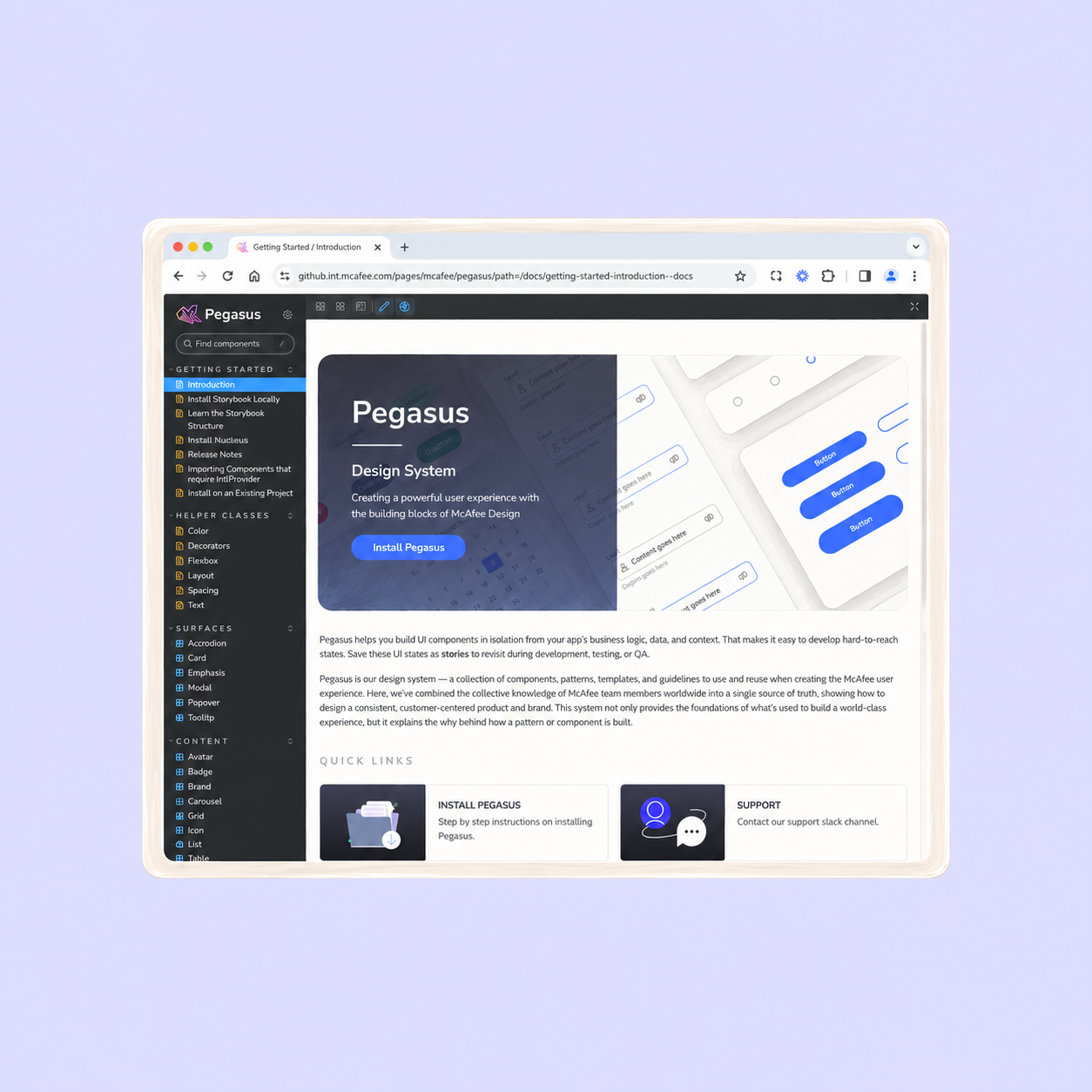
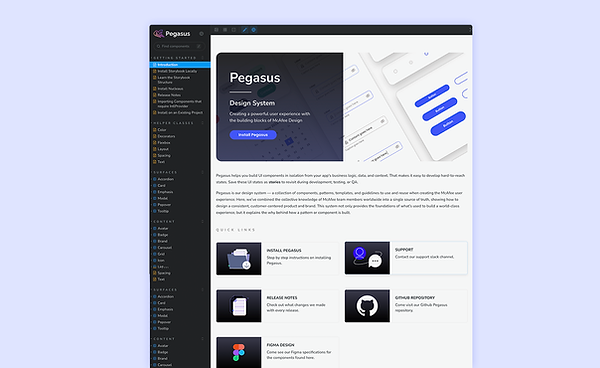
The released Pegasus hub for consistent UI components and guidelines
Leadership Growth: From Crafting Systems to Cultivating Teams
Personal Growth: Discovering My Passion for Leadership
Through Pegasus, I realized that design leadership extends beyond pixels and prototypes — it's about building teams, fostering collaboration, and driving organizational change. Transitioning from an individual contributor to a manager was a pivotal career moment.
After handing off Pegasus to another manager, I stepped into the Product Design Manager role, focusing on growing and mentoring product designers and ensuring their work was strategic and impactful.
Lessons Learned & Reflections
Early stakeholder alignment is critical for long-term success.
Treating a design system like a product creates a structured roadmap for adoption.
Hiring the right talent and building a team is more important than doing everything solo.
A design system is about enabling teams to work efficiently and consistently — not just components.
Final Thoughts: The Legacy of Pegasus
Pegasus started as an idea and grew into McAfee's first scalable design system, impacting teams and products company-wide. It also shaped my career trajectory, helping me transition from designer to leader. The experience solidified my passion for people management, cross-functional collaboration, and design leadership — principles I continue to apply today.